Why We’re Trading ‘Vacation Mode’ for Slow Travel (And How to Choose the Destination That Fits Your Life)
Right now, more than 18 million Americans are trading their office views for cobblestone streets in Portugal, coastal villages in Mexico, or the vibrant cafe culture of the Balkans.
According to MBO Partners, the nomadic lifestyle has officially hit the mainstream, with millions realizing that the "American Dream" doesn't have to be tied to a single zip code. The math behind the movement is compelling: while the average US household now spends over $6,500 a month on basic necessities, a high-quality life abroad—including premium housing and world-class private health care—is frequently found for half that cost.
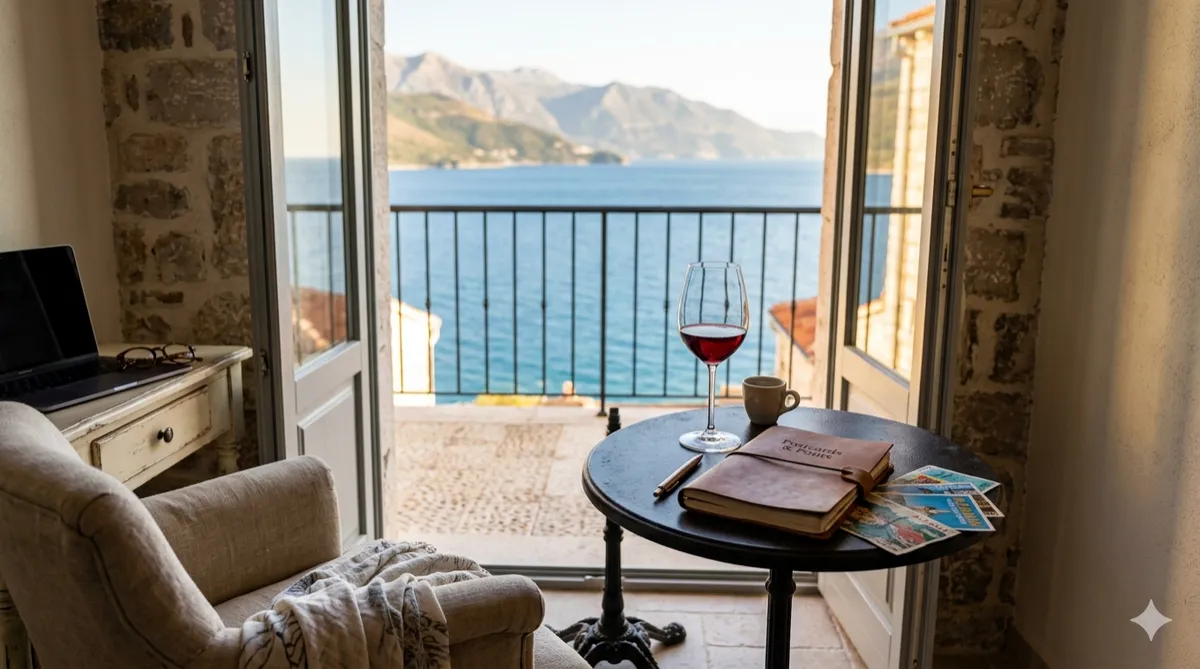
For many, it isn't about running away from home; it's about running toward a life with more margin. We decided to stop saving our happiness for a two-week vacation and started building a lifestyle where the "Postcard" is the everyday view. Slow travel isn’t a tedious logistics puzzle; it’s an invitation to stop rushing and start sipping. Whether your perfect pace involves changing your view every 30 days or staying just long enough to be called a 'local,' here is the process we use to pick up a map and decide where the adventure goes next.
Before we dive into the specific "filters" we use to pick our destinations, we want to share the honest story of why we decided to leave the US, why we chose a place most people can't find on a map, and the three myths we had to deconstruct before we could pack our bags.
Watch: Early Retirement in Albania: Why We're Leaving the US
What is the ‘Slow Travel’ Lifestyle, Really?
If traditional travel is a sprint to see every museum and monument before your flight home, slow travel is a stroll. It’s the difference between taking a quick espresso at a crowded bar and lingering over a pour-over while you watch the city wake up.
Slow travel is the intentional choice to stop "visiting" and start living. It’s a shift in perspective where you trade the frantic logistics of a five-city-in-ten-day itinerary for the luxury of time. It’s about having enough room in your schedule to discover the hidden gems guidebooks miss, or finally having the time to learn enough of the local language to joke with the vendors at the market.
The beauty of this lifestyle is that it’s a "choose-your-own-adventure" story:
The 30-Day Hop: A strategic choice for those who value high-velocity discovery. This might look like a month in a sun-soaked apartment in Lisbon, followed by a move to a coastal village in Spain. You stay just long enough to find your "regular" coffee spot before the excitement of a new horizon takes over.
The Seasonal Stay: For those who crave a bit more "zen" in their routine, it might mean settling into a single country for three or even six months. This is where the magic of integration happens—where you stop feeling like a guest and start feeling like a neighbor.
Ultimately, slow travel is about freedom. It’s the freedom to move when you're bored and the freedom to stay when you're enchanted.
The Decision-Making Framework: Using ‘Filters’
When the whole world is available to you, the sheer number of choices can lead to "analysis paralysis." To move from dreaming to departing, we use a series of filters.
Think of these filters as a funnel: you pour in every country that looks interesting on Instagram, and as you apply each layer of criteria—legalities, safety, and infrastructure—only the destinations that truly align with a high-standard life remain. By filtering your choices before you look at flights, you ensure your adventure is built on a foundation of logic rather than just a pretty view.
Filter 1: The ‘Bureaucracy Baseline’
Nothing kills the whimsy of a sunset quite like an unexpected appointment at an immigration office. Before you can decide which local vintage you’ll be sipping, you have to know how long the door is actually open for you.
The ‘Standard Entry’ (30–90 Days): This is the default for most of the world. Whether it’s the Schengen Zone (covering 29 European countries) or popular hubs in Asia, the rules are strict: you get a 30, 60, or 90-day window before you have to leave. This is the "Logistics Heavy" path, and it adds in more travel expenses between destinations, but it offers the most variety for those who gain energy from a change of scenery.
The Long-Stay Gems (No Visa Required): These are rare countries that offer massive breathing room without the paperwork. For example, US citizens can stay in Albania for one year on a simple entry stamp. Georgia (one year) and Mexico (up to 180 days) offer similar "easy-in" policies that allow you to truly unpack.
The Deep Dive (Formal Residency): If you’ve fallen in love with a specific culture, you can apply for a variety of long-term stay visas depending on the country. This involves more "adulting"—criminal record checks and proof of income—but rewards you with the stability of staying for a year or more.
Filter 2: The ‘Lifestyle Alignment’
In slow travel, we stop choosing destinations based on "what there is to see" and start choosing them based on "how we want to live." To find a home rather than a stop, filter for these four lifestyle anchors:
1. Safety and Peace of Mind A high-standard life requires a high standard of safety. We look for "living safety"—the ability to walk home from a late-night wine bar or explore a new neighborhood solo with total confidence. If the data (like the Global Peace Index) doesn't reflect a secure environment, it’s off the list.
2. Cultural Rhythm and Activities Does the city stay up late with vibrant town squares and local "Pours" (wineries and breweries)? Or is it a quiet coastal retreat? Match the local "menu" of activities—hiking, history, or hobby groups—to what actually fulfills you on a Tuesday afternoon.
3. The 'True' Cost of Living It isn't just about rent; it’s about the cost of living well. This includes "The Yes Budget"—having enough margin to say yes to regional travel, private English-speaking healthcare, and local dining without checking your bank app.
4. Climate and Connection Treat the globe like a thermostat. You don't have to commit to a snowy winter or a humid summer; you can time your arrival to hit the "peak" version of a country—like a Balkan autumn or an Asian spring—and move on before the weather turns. Additionally, verify the Digital Backbone: high-speed internet is essential for staying connected to family, working remotely, and managing your world.
The Strategy: Making the Lifestyle Sustainable
Turning "slow travel" from a dream into a reality requires more than just a plane ticket; it requires a logistical framework. If you approach this like a long vacation, you’ll burn out (and blow your budget) in sixty days. To make this lifestyle actually possible, you need to master three specific areas:
1. The ‘Monthly Booking’ Anchor
The single most important financial move you can make is committing to the 30-day stay. Booking by the night or the week is for tourists, and it’s priced accordingly. Most major platforms (like Airbnb or Booking.com) trigger a "monthly discount" once you hit the 28–30 day mark, often slashing the price by 30% to 60%.
This is the anchor that makes the math work for anyone traveling on a budget. By staying for a full month, you secure a high-standard, comfortable home with a full kitchen and the necessities for less than the price of a mid-range hotel. This "anchor" gives you a predictable monthly overhead, allowing you to actually enjoy the destination rather than stressing over the nightly rate.
2. Strategic Hubs and Regional Mobility
One of the best ways to keep your adventure high and your costs low is to identify a Regional Hub. This is a country with easy entry requirements and a major low-cost carrier presence (think Tirana, Lisbon, or Kuala Lumpur).
By basing yourself in a hub, you gain access to the "Postcard" view without the "Postcard" price tag. You can spend 30 days living like a local in a more affordable hub, then take $50 regional flights or train rides to explore neighboring iconic cities for a few days at a time. It gives you the variety you want without the high cost of living in a major tourist capital full-time.
3. The 48-Hour ‘Onboarding’ Rule
When you arrive in a new destination, the first 48 hours are for life setup, not sightseeing. To settle in quickly and keep your "Standard" high, follow an onboarding routine:
The Household Search: Locate the neighborhood butcher, the best bakery, and the fresh produce market. This immediately moves you away from expensive tourist restaurants and into the high-quality, local food culture.
The ‘Third Place’: Find your morning sanctuary—the specific cafe or park where you’ll start your day. Establishing a routine early is what stops you from feeling like a transient visitor.
The "Return or Retire" Audit: By week two, you’ll have enough data to evaluate the destination’s long-term potential. Is the infrastructure holding up? Is the culture a fit? You aren't deciding where to go next month (since those plans are likely already booked to lock in the best rates), but you are deciding if this country stays on your "Return List" for a deep-dive residency or if it’s a "one-and-done" experience.
Final Thought: Buying Back Your Margin
Slow travel isn't about seeing the world on a budget; it’s about using the global market to buy back your time. When you realize a 30-day stay in a high-quality international destination costs significantly less than your US monthly expenses, the "American Dream" starts to look very different.
If you could secure a month-long stay in any destination for half of your current monthly overhead, where would you book your first thirty days?
The Intentional Destination Checklist
Before you book that 30-day stay, run your potential destination through these four "filters" to ensure it’s an upgrade, not just a change of scenery.
1. The Safety & Stability Filter
Global Peace Index: Does the country rank at or above your personal comfort level for safety?
Local Infrastructure: Are the roads, public transit, and emergency services reliable?
Healthcare Quality: Is there access to modern medical facilities and "US-standard" private insurance options?
2. The Cultural & Social Rhythm
Value Alignment: Do the local customs, social norms, and pace of life mirror the way you want to live?
The "Pours": Does the area offer the social "vibe" you enjoy (e.g., local wineries, craft breweries, or a vibrant coffee culture)?
Activity Access: Are your primary hobbies (hiking, history, arts, or fitness) easily accessible within a 20-minute radius?
Walkability: Can you manage your daily errands (bakery, market, cafe) on foot?
3. The Practical Non-Negotiables
The "30-Day Arbitrage": Does the monthly rate for a premium rental provide a significant discount over the nightly rate?
Digital Backbone: Can the host provide a verified speed test showing high-speed, stable fiber internet?
The "Dry" Bathroom: Is the shower enclosed to prevent a "wet room" floor?
Climate Sync: Does the local forecast for your specific dates match your "perfect" weather?
4. The Lifestyle Margin (The Math)
Total Monthly Cost: Is the combined cost of rent, utilities, food, and health insurance significantly lower than your US baseline?
The "Yes" Budget: Does the lower cost of living leave you with enough margin to say "yes" to tours, regional travel, and local dining without stress?
Pro Tip: If a destination doesn’t hit at least 80% of your "checks," it might be a great place to visit for a weekend—but it’s probably not your next 30-day home.